$11 Trillion in US debt, the Federal Government has taken the cue that there is no need to have liquid assets when you control the printing press. In doing so, over the last decades, the perception of wealth has been superior to actual wealth... and as such, inflation of the US dollar has soared, making net wealth actually much less than mere decades prior. Standards of living are vastly improved, however, again, I submit that this is merely perception of wealth.
What is more troubling is the increased role the US government is taking in providing social programs by way of social bureaucracies. With the numbers of individuals dependent on these programs swelling, there is a simple question begin begged: What happens when the money runs out?
The old parable "Give a man a fish and he'll eat for a day, teach a man to fish and he will always be fed" comes to mind.
When the money runs out, when the system begins to shut down, you will get New Orleans circa Hurricane Katrina - where services were less than a mile away, with little "water walking", yet tens of thousands of people sat idly by yelling into the cameras and shouting into the air "WE WANT HELP"... sadly, some died as the mob idly stood by, unable and unwilling to save themselves - complete dependence on government assistance right up until the end.
When "we want help" fails to work for millions, as it failed during Katrina, there is going to be a catastrophe never before seen here in the United States. When the numbers are such that entire communities and ways of life have been established on government dependence, two things can happen when the well runs dry: One - entire communities begin to starve to death, disease overtakes the communities and they wither and die; two - they revolt and attack those who they perceive as 'hoarding' their entitled necessities.
I suppose option three is that the government gains total control of commodities as well as money, forcing government mandated crops for the "US Food Program" and government mandated occupation in support of the betterment of the nation. The full implementation of "to those based on their need from those based on their ability" - also known as the Marxist Dictum.
Regarding option one: private help, charitable foundations, and the like will step in, as they do now, to quell the hunger and aid those trained only to receive... however, the ability to sustain this level of charity will become impossible. You will surely begin to see limitless masses pining for their 'fair share' of the charity - unwilling to give back or to step aside for the next hungry mouth. Entire communities will be displaced or deceased... and it will be blamed on the inability of private charity to provide.
Regarding option two: I believe that conspiracy theorists refer to this scenario as the "race wars". Communities of inner city mobs will begin raids on the suburban area for wealth, then basics like food and water. The ethnic make-up of the cultural boundaries is clear to all, which is why the term 'race wars' is used. This civil unrest will be the final chapter in the story of the United States, as it existed as a free society.
The underlying problem continues to point toward government involvement. The establishment of sub-cultures, be they "migrant workers" or unskilled inner city welfare communities, is the horrible side effect of government social welfare programs. When the intent is to provide all for everyone, the system fails itself and the nation.
When the systems were 'sold' to the citizens of the US it was during a crisis - and remember the Obama administration taught us that no good crisis should go unused. Past crises were used to sell a "support net" intended to help folks get back on their feet... they became abused and resulted in the mess we see today - complete dependence.
In short - the money will run out... the money has run out. The continued wealth we see is perception only - the US is bankrupt and is digging faster into debt than ever before in the history of its existence. Once the money is gone, we are going to have a flood of government dependents screaming "We Want Help" - but in the end there will be ne'er an ear to listen.
Showing posts with label welfare. Show all posts
Showing posts with label welfare. Show all posts
Monday, May 4, 2009


Tuesday, December 23, 2008
Indian Child Welfare Act - Racist Policy or Cultural Preservation?
Is the ICWA a racist policy, or one established to protect Indian Culture?
To accurately answer the question, we first must understand the term "racism". Racism, by its simplest definition, is the belief that race is the primary determinant of human traits and capacities and that racial differences produce an inherent superiority of a particular race.
This is not a belief held by Indian Tribes, nor is it referenced to in the definition of ICWA. In fact, ICWA begins by clearly stating that the intent of the law is to ensure security and stability to Tribes and Children of the Tribes, as well as respecting the continued existence of cultural and social standards of the tribes. It is, therefore, a policy protecting the culture of Natives in America.
To summarize this short argument, before moving forward, it is necessary to reiterate the important fact that maintaining tribal integrity is NOT racist - it is a means of cultural survival.
Why is cultural survival important? Aren't all Indians the same? And shouldn't Indians simply give up and join the "American Culture"?
Now we are at the heart of this discussion. Let's start by answering the above questions in reverse order, and then we will be prepared to truly understand the importance of cultural survival.
The "American Culture", historically, has been one of a "gold rush" mentality - take what you can, as fast as you can, in order to achieve success - often times failing to regard the broader impact of their actions... Quality of life and future generations are second tier to individual achievement. The American Culture can be summed up, socially, as an agrarian society which became an industrial powerhouse - a focus on family interests, sporting and other social events, which as of late has become a society of consumerism and reality television - one would argue that this, in itself, is the erosion of classic American Culture. Should Indian Tribes give up reservations and become "American", giving up the memory of their individual culture? No more than should European Americans stop celebrating Oktoberfest, Halloween, or give up agrarian rituals, like summer vacation from schools... The call for further "Americanization" of the tribes is little more than a call to eliminate the reservations and complete the land-grab that began hundreds of years ago, and to eliminate the memory of the original inhabitants of this land - ancestors to many of my readers (and myself).
To answer the question about similarity between all Indian Tribes, one need look no further than a language stock map for original inhabitants, or reference any study on tribal culture to understand that though there are basic elements inherent to the nomadic or tribal lifestyle, each tribe of Indians is culturally unique. In fact, some tribes held no more than 50-100 members when they were "discovered" by white explorers, and had no ties to larger regional dominating tribes. Though similarities existed, regionally, it was out of necessity to survive in the lands - for instance, Plains Tribes, such as Oglala, where a nomadic hunting tribe, using housing styles and hunting tactics necessitated by the need to make rapid relocation of their village in order to stay near their migrating food supply. In comparison, Northwestern tribes, such as the Makah or Snoqualmie, were largely stationary and built permanent Longhouses where large portions of the tribes would live, and maintained diets largely from foraging and constant fish runs on the many rivers (or whales - in the case of the Makah). Language, lifestyle, societal structures, and even religion all varied from tribe to tribe, and from region to region... it would take years of study to fully grasp the complexities of each tribe, region, and culture - stressing the importance of passing these subtleties on to children of the tribe.
 Which brings us to the final point - the importance of cultural survival. Michael Savage, a radio commentator, often says that there are three elements necessary to ensure a society succeeds - borders, language, culture. The borders have been stolen long ago from the Indian Tribes, replaced with reservations meant to "Americanize" Indians into an agrarian society - whose land reserves were arbitrarily reduced through a succession of court orders and illegal laws in order to establish homesteading across the nation.
Native Languages have been nearly lost for Indians, as part of the Americanization Era and Policy towards Indians in the late 19th and early 20th centuries. In fact, the 1868 Fort Laramie Treaty included a mandate for White teachers to teach English to Sioux children. As can be seen from the following map, even in areas of large Indian populations, by and large, language has been eradicated amongst those who still live within the reservations:

Special exception can be seen in areas of the Navajo/Hopi Nation, where 14-65% can speak their native tongue, and areas of Crow, Cheyenne, and Sioux reservations where 14-40% speak their native tongue... sadly, across America, native languages have been eliminated.
Finally, and most importantly - Culture. With the variations in Indian culture being as vast as the number of tribes, it is most certainly and fundamentally important that tribal culture be maintained and passed from generation to generation. It is the culture that defines who you are as a group, as an entity, as a people - and to lose that identity is to lose an important part of yourself. Rituals, art, music, clothing, even philosophy - it is all culturally relevant, and once lost, can never be fully regained. The importance of this culture is recognized in the ICWA, as the driving force behind the law's legitimacy... it is also the reason for Total Immersion teaching by tribes in the island nations, and being introduced by the Oglala Sioux on the Pine Ridge Reservation. The Congress was 100% correct in the ICWA document when they stated: "there is no resource that is more vital to the continued existence and integrity of Indian tribes than their children"...
In conclusion, the Indian Child Welfare Act is not a racist law prohibiting whites from adopting Indian children, rather, a thoughtful protection of the integrity of Indian Culture in America. It is a document recognizing the most vital resource to ensuring a continuation of tribal culture, and protecting the future of that culture. When a culture is in threat of extinction, lingually, artistically, or otherwise, it should be the will of the people to protect and preserve... that is the intent of this law - not as an obstacle or punishment to adopting families, but as a protection of a treasure at risk of being lost forever.
To accurately answer the question, we first must understand the term "racism". Racism, by its simplest definition, is the belief that race is the primary determinant of human traits and capacities and that racial differences produce an inherent superiority of a particular race.
This is not a belief held by Indian Tribes, nor is it referenced to in the definition of ICWA. In fact, ICWA begins by clearly stating that the intent of the law is to ensure security and stability to Tribes and Children of the Tribes, as well as respecting the continued existence of cultural and social standards of the tribes. It is, therefore, a policy protecting the culture of Natives in America.
To summarize this short argument, before moving forward, it is necessary to reiterate the important fact that maintaining tribal integrity is NOT racist - it is a means of cultural survival.
Why is cultural survival important? Aren't all Indians the same? And shouldn't Indians simply give up and join the "American Culture"?
Now we are at the heart of this discussion. Let's start by answering the above questions in reverse order, and then we will be prepared to truly understand the importance of cultural survival.
The "American Culture", historically, has been one of a "gold rush" mentality - take what you can, as fast as you can, in order to achieve success - often times failing to regard the broader impact of their actions... Quality of life and future generations are second tier to individual achievement. The American Culture can be summed up, socially, as an agrarian society which became an industrial powerhouse - a focus on family interests, sporting and other social events, which as of late has become a society of consumerism and reality television - one would argue that this, in itself, is the erosion of classic American Culture. Should Indian Tribes give up reservations and become "American", giving up the memory of their individual culture? No more than should European Americans stop celebrating Oktoberfest, Halloween, or give up agrarian rituals, like summer vacation from schools... The call for further "Americanization" of the tribes is little more than a call to eliminate the reservations and complete the land-grab that began hundreds of years ago, and to eliminate the memory of the original inhabitants of this land - ancestors to many of my readers (and myself).
To answer the question about similarity between all Indian Tribes, one need look no further than a language stock map for original inhabitants, or reference any study on tribal culture to understand that though there are basic elements inherent to the nomadic or tribal lifestyle, each tribe of Indians is culturally unique. In fact, some tribes held no more than 50-100 members when they were "discovered" by white explorers, and had no ties to larger regional dominating tribes. Though similarities existed, regionally, it was out of necessity to survive in the lands - for instance, Plains Tribes, such as Oglala, where a nomadic hunting tribe, using housing styles and hunting tactics necessitated by the need to make rapid relocation of their village in order to stay near their migrating food supply. In comparison, Northwestern tribes, such as the Makah or Snoqualmie, were largely stationary and built permanent Longhouses where large portions of the tribes would live, and maintained diets largely from foraging and constant fish runs on the many rivers (or whales - in the case of the Makah). Language, lifestyle, societal structures, and even religion all varied from tribe to tribe, and from region to region... it would take years of study to fully grasp the complexities of each tribe, region, and culture - stressing the importance of passing these subtleties on to children of the tribe.
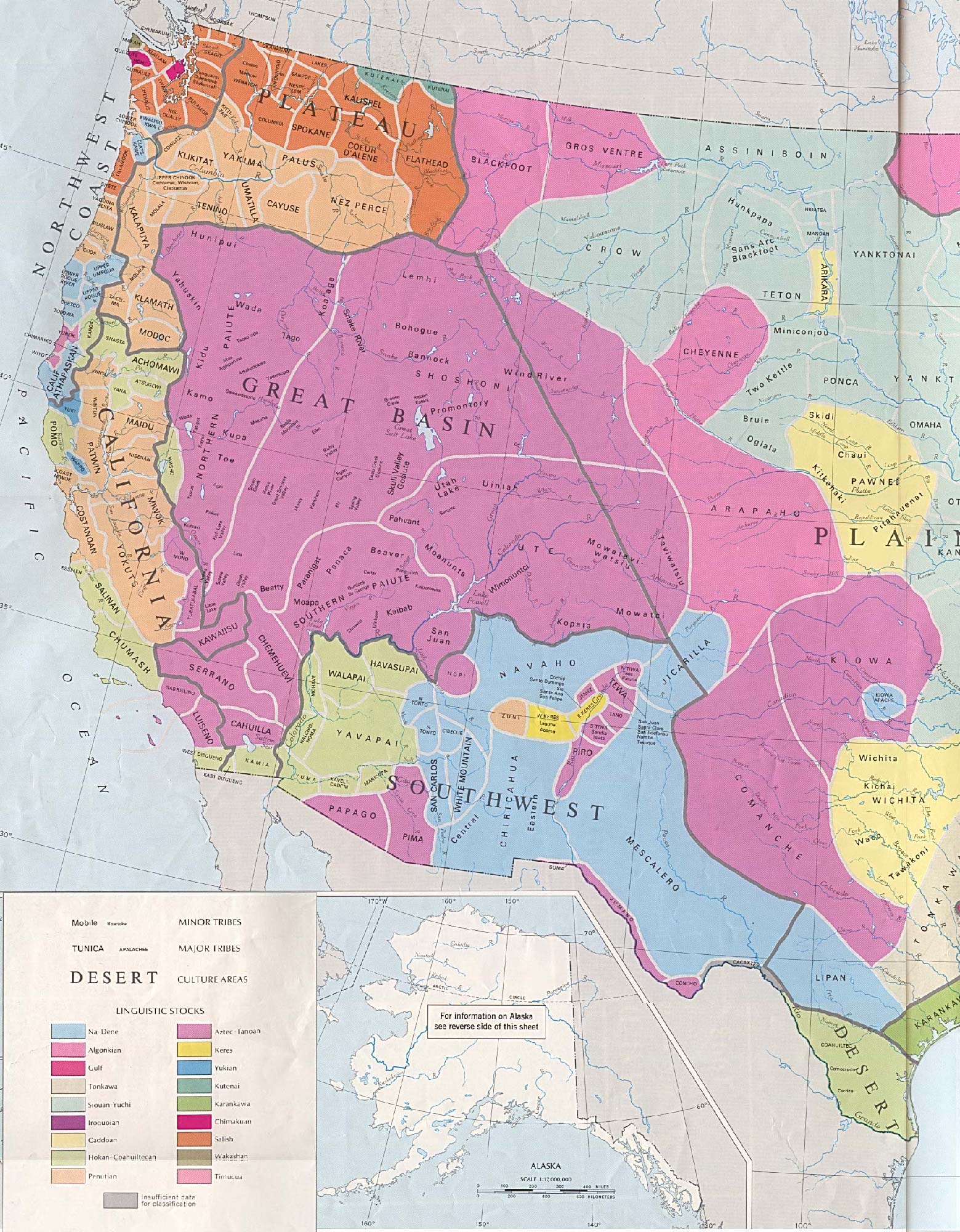
 Which brings us to the final point - the importance of cultural survival. Michael Savage, a radio commentator, often says that there are three elements necessary to ensure a society succeeds - borders, language, culture. The borders have been stolen long ago from the Indian Tribes, replaced with reservations meant to "Americanize" Indians into an agrarian society - whose land reserves were arbitrarily reduced through a succession of court orders and illegal laws in order to establish homesteading across the nation.
Native Languages have been nearly lost for Indians, as part of the Americanization Era and Policy towards Indians in the late 19th and early 20th centuries. In fact, the 1868 Fort Laramie Treaty included a mandate for White teachers to teach English to Sioux children. As can be seen from the following map, even in areas of large Indian populations, by and large, language has been eradicated amongst those who still live within the reservations:

Special exception can be seen in areas of the Navajo/Hopi Nation, where 14-65% can speak their native tongue, and areas of Crow, Cheyenne, and Sioux reservations where 14-40% speak their native tongue... sadly, across America, native languages have been eliminated.
Finally, and most importantly - Culture. With the variations in Indian culture being as vast as the number of tribes, it is most certainly and fundamentally important that tribal culture be maintained and passed from generation to generation. It is the culture that defines who you are as a group, as an entity, as a people - and to lose that identity is to lose an important part of yourself. Rituals, art, music, clothing, even philosophy - it is all culturally relevant, and once lost, can never be fully regained. The importance of this culture is recognized in the ICWA, as the driving force behind the law's legitimacy... it is also the reason for Total Immersion teaching by tribes in the island nations, and being introduced by the Oglala Sioux on the Pine Ridge Reservation. The Congress was 100% correct in the ICWA document when they stated: "there is no resource that is more vital to the continued existence and integrity of Indian tribes than their children"...
In conclusion, the Indian Child Welfare Act is not a racist law prohibiting whites from adopting Indian children, rather, a thoughtful protection of the integrity of Indian Culture in America. It is a document recognizing the most vital resource to ensuring a continuation of tribal culture, and protecting the future of that culture. When a culture is in threat of extinction, lingually, artistically, or otherwise, it should be the will of the people to protect and preserve... that is the intent of this law - not as an obstacle or punishment to adopting families, but as a protection of a treasure at risk of being lost forever.
Thursday, December 18, 2008
Indian Child Welfare Act, Florida, and Coerced Adoptions
After being contacted by Mary Ramos, who is a victim of coerced adoption in violation of the Indian Child Welfare Act, I reviewed her story and had the opportunity to talk for an hour and a half about the legal battle she finds herself in regarding her son Elijah, where the judge ruled against her after ignoring blatant fraud, coercion, and violation of ICWA. After hearing her story, I find myself compelled to share it with my readership.
A simple search regarding coerced adoption leaves you with a mind numbing amount of information, with the ultimate result, sadly, being that the practice is more common place than one would think.
In many cases, my research has indicated that Florida’s laws are so loose as to allow adoption schemes, coercion, and traps that are not overturned by legal challenges – even in the case of Mary Ramos, who contacted the agency in order to rescind her paperwork within the allotted three days. As my research has found, once you are targeted by a Florida Adoption Agency – “you are screwed”… and the courts are unlikely to support challenging mothers fighting paperwork they signed under pressure from these agencies.
However, in Mary’s case, there was a simple fact that was overlooked – Mary is a Native American, registered with the Avogel tribe of Louisiana – with a certified note from the Tribal Chief, blood records, birth certificates, and registry information to support her tribal belonging. This makes her child, by rules of the tribe, a registered member of the Avogel tribe – and as such, subject to the rules and regulations of the ICWA – Indian Child Welfare Act of Congress (circa 1979) - in the case of forced termination of parental rights. Mary Ramos has the ability (but not the means) to appeal the ruling of Florida Judge Arthur M Birken for a number of procedural and evidentiary irregularities – but the major source of concern is that the Judge threw out ICWA in the ruling and the adopting agency failed to notify the BIA or the Avogel Indian Tribe, in violation of 25 CFR § 23.11A.
A ruling in the Colorado Jefferson County District Court addressed this issue on November 30, 2006 – stating such:

In discussing this issue with Mary, a substitute teacher and avid member of her church, she described the events leading up to the initial contact with the adoption agency. There was serious financial and mental hardships which caused an increased depression, which led to her new husband to suggest contacting the agency. The husband is not the biological father of the child, Elijah, nor is he the father of Mary’s 10 year old daughter (9 at the time of the court ruling). Mary’s contact with the adoption agency led to immediate, consistent, and persistent contact by the agency convincing Mary that adoption was the best option for the 1 ½ year old boy. The process, as well as the persistence, placed Mary under a great deal of duress, resulting in the eventual coercion to meet a family, sign the paperwork, and turn over her child. Florida law allows a 3 day period in which the biological parents can reconsider their actions – which Mary did. The adoption agency was given a telephone call, which was met with resistance and a notice that Faxing such a request to renege would not be allowed – which meant that a 4 hour trip would be necessary to file such paperwork, causing Mary’s filing time to be in excess of the 3 day grace period. In the end, Mary lost her child on a technicality – with full intent of keeping her child. A technicality which the Florida judge wrongly upheld.
Mary has not seen her son, a picture or otherwise, since October 2007.
Mary showed intent to repeal the adoption within the mandated time, made an attempt to stop the process within that same time, and as such, this ruling became a case of forced removal – by the judge – in violation of ICWA.
The judge did not find Mary unfit to be a mother, else she would have lost her eldest child, Autumn. The judge ruled on behalf of the agency, upholding their right to terminate Mary’s Parental Rights – but did so with the following irregularities:
This leaves Mary with no choice but to appeal – leaving her appeal date as December 25th 2008. Mary is left without legal counsel, without funds to acquire counsel, and without sufficient knowledge of legal rules to properly file an appeal that won’t be thrown out on a simple technicality (such as using an individual’s full name as opposed to initials in the body of the appeal). She is in desperate need of immediate advice, else she loses her child on a technicality – and ultimately on fraud and coercion.
The United States ICWA states in Title 25, Chapter 21, § 1901 (3)
Mary Ramos: "If I do nothing they win. If I open my mouth and tell the world, maybe someone will hear..."
Mary is in dire need of assistance on this case. If any reader has the ability to provide advice, feedback, or contacts that could assist in her appeal, please contact me and I will gladly put you in contact. We have a week to uphold justice – for a tribe – for a mother – and for a child.
****UPDATE****
Mary has requested that I make special mention to share this story, blog about it, YouTube about it, forward it on to all types of media - mainstream and alternative. her case is not a lost cause - and an informed public can do wonders to aid in her struggle, as well as help others who may find themselves in the same process of coerced adoption!
God Bless!
A simple search regarding coerced adoption leaves you with a mind numbing amount of information, with the ultimate result, sadly, being that the practice is more common place than one would think.
In many cases, my research has indicated that Florida’s laws are so loose as to allow adoption schemes, coercion, and traps that are not overturned by legal challenges – even in the case of Mary Ramos, who contacted the agency in order to rescind her paperwork within the allotted three days. As my research has found, once you are targeted by a Florida Adoption Agency – “you are screwed”… and the courts are unlikely to support challenging mothers fighting paperwork they signed under pressure from these agencies.
However, in Mary’s case, there was a simple fact that was overlooked – Mary is a Native American, registered with the Avogel tribe of Louisiana – with a certified note from the Tribal Chief, blood records, birth certificates, and registry information to support her tribal belonging. This makes her child, by rules of the tribe, a registered member of the Avogel tribe – and as such, subject to the rules and regulations of the ICWA – Indian Child Welfare Act of Congress (circa 1979) - in the case of forced termination of parental rights. Mary Ramos has the ability (but not the means) to appeal the ruling of Florida Judge Arthur M Birken for a number of procedural and evidentiary irregularities – but the major source of concern is that the Judge threw out ICWA in the ruling and the adopting agency failed to notify the BIA or the Avogel Indian Tribe, in violation of 25 CFR § 23.11A.
A ruling in the Colorado Jefferson County District Court addressed this issue on November 30, 2006 – stating such:
In this case, the state was removing Native children to foster care due to violent criminal and drug related behavior of the father. The children belonged to the Citizen Potawatomi Nation. The court ultimately upheld the appeal, rejecting the termination of parental rights based on the failures in the notification process required for removing native children from native family members. In Mary’s case, the question of state mandated child removal versus consent of adoption (with reversal of decision within the short period of time allowed) needs to be answered.Congress enacted the ICWA because of concerns over the involuntary separation of Indian children from their families for placement in non-Indian homes. B.H. v. People in Interest of X.H., 138 P.3d 299 (Colo. 2006). The purpose of the ICWA is to protect Indian children who are members of or are eligible for membership in an Indian tribe. 25 U.S.C. § 1901(3) (2000). The Colorado General Assembly has expressly provided for compliance with, and consistent application of, the ICWA. See § 19-1-126, C.R.S. 2006.
The ICWA promotes the best interests of Indian children and protects the stability of Indian tribes. The ICWA is based on the presumption that the protection of an Indian child’s relationship with the tribe is in the child’s best interests. People in Interest of A.T.W.S., 899 P.2d 223 (Colo. App. 1994).
The ICWA applies when the state seeks to place an Indian child in foster care and when the state seeks to terminate parental rights. See 25 U.S.C. §§1911, 1912 (2000). Under those circumstances, whenever the court knows or has reason to know that an Indian child is involved, the party seeking placement or termination must provide notice to the child’s tribe or his or her parent’s tribe, or to the Bureau of Indian Affairs (the BIA) if the tribe cannot be identified or located. 25 U.S.C. § 1912(a) (2000); see also People in Interest of A.N.W., 976 P.2d 365 (Colo. App. 1999).
If notice is not given in compliance with the provisions of 25 U.S.C. § 1912, the tribe may petition to invalidate the order terminating parental rights. 25 U.S.C. § 1914. The tribe may raise the issue of inadequate notice in the first instance in this court, as the ICWA specifically provides that the issue of inadequate notice may be raised in "any court of competent jurisdiction."25 U.S.C. § 1914; see In re L.A.M., 727 P.2d 1057 (Alaska 1986); In re Antoinette S., 104 Cal. App. 4th 1401, 129 Cal. Rptr. 2d 15 (2002).

In discussing this issue with Mary, a substitute teacher and avid member of her church, she described the events leading up to the initial contact with the adoption agency. There was serious financial and mental hardships which caused an increased depression, which led to her new husband to suggest contacting the agency. The husband is not the biological father of the child, Elijah, nor is he the father of Mary’s 10 year old daughter (9 at the time of the court ruling). Mary’s contact with the adoption agency led to immediate, consistent, and persistent contact by the agency convincing Mary that adoption was the best option for the 1 ½ year old boy. The process, as well as the persistence, placed Mary under a great deal of duress, resulting in the eventual coercion to meet a family, sign the paperwork, and turn over her child. Florida law allows a 3 day period in which the biological parents can reconsider their actions – which Mary did. The adoption agency was given a telephone call, which was met with resistance and a notice that Faxing such a request to renege would not be allowed – which meant that a 4 hour trip would be necessary to file such paperwork, causing Mary’s filing time to be in excess of the 3 day grace period. In the end, Mary lost her child on a technicality – with full intent of keeping her child. A technicality which the Florida judge wrongly upheld.
Mary has not seen her son, a picture or otherwise, since October 2007.
Mary showed intent to repeal the adoption within the mandated time, made an attempt to stop the process within that same time, and as such, this ruling became a case of forced removal – by the judge – in violation of ICWA.
The judge did not find Mary unfit to be a mother, else she would have lost her eldest child, Autumn. The judge ruled on behalf of the agency, upholding their right to terminate Mary’s Parental Rights – but did so with the following irregularities:
1. Allowed Mary’s attorney to remove himself from the case (after collecting
$10,000) the day before trial. The judge allowed a continuance of about 6 weeks,
which was a time insufficient for Mary to find proper legal counsel – Mary
ultimately had to represent herself.
2. The removed attorney was a childhood friend of the judge, and spent some time working as a clerk for the judge – the judge ruled that he would allow the attorney to leave the case.
3. The judge knowingly allowed perjured testimony from the notary public, provided legal advice to her from the bench, and therefore knowingly allowed fraudulently
notarized documentation as evidence against Mary.
4. The judge dismissed any request from the Avogel tribe to be made party to the suit, any acknowledgement of the ICWA procedures (as this was a case about forced adoption), and dismissed jurisdiction complaints from the Chief of the Avogel Tribe.
5. Mary’s date for a retrial was set 2 days before she was delivered the order of the court, making it impossible for a request for retrial.
This leaves Mary with no choice but to appeal – leaving her appeal date as December 25th 2008. Mary is left without legal counsel, without funds to acquire counsel, and without sufficient knowledge of legal rules to properly file an appeal that won’t be thrown out on a simple technicality (such as using an individual’s full name as opposed to initials in the body of the appeal). She is in desperate need of immediate advice, else she loses her child on a technicality – and ultimately on fraud and coercion.
The United States ICWA states in Title 25, Chapter 21, § 1901 (3)
“that there is no resource that is more vital to the continued existence and integrity of Indian tribes than their children and that the United States has a direct interest, as trustee, in protecting Indian children who are members of or are eligible for membership in an Indian tribe;”As such, with expressed interest being shown by the Avogel tribe, expressed interest by the mother to renege the adoption within the three day period, the State of Florida and justices therein should comply with the intent of federal law and federal protection of the integrity of the Avogel tribe.
Mary Ramos: "If I do nothing they win. If I open my mouth and tell the world, maybe someone will hear..."
Mary is in dire need of assistance on this case. If any reader has the ability to provide advice, feedback, or contacts that could assist in her appeal, please contact me and I will gladly put you in contact. We have a week to uphold justice – for a tribe – for a mother – and for a child.
****UPDATE****
Mary has requested that I make special mention to share this story, blog about it, YouTube about it, forward it on to all types of media - mainstream and alternative. her case is not a lost cause - and an informed public can do wonders to aid in her struggle, as well as help others who may find themselves in the same process of coerced adoption!
God Bless!
Subscribe to:
Posts (Atom)